
If you’re searching for details about Harney & Sons tea bags, you likely care deeply about what goes into your cup—not just the tea leaves, but the bag itself. Questions about plastic, microplastics, safety, and compostability are more relevant than ever. This guide provides clear, authoritative answers based on Harney & Sons’ official commitments and industry practices.
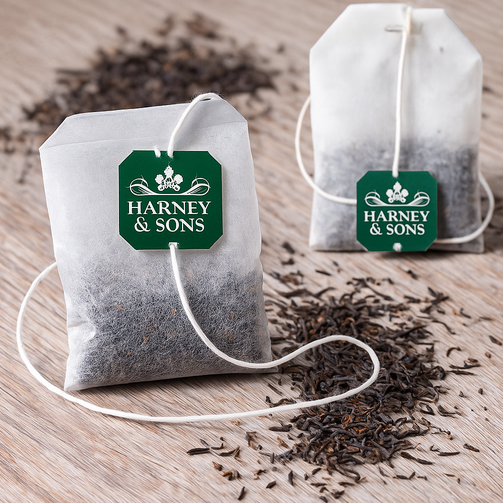
The Direct Answer: What Are Harney & Sons Tea Bags Made Of?
Harney & Sons primarily uses plant-based, biodegradable nonwoven materials for its tea sachets. Their signature product—the beautiful, see-through “silky” pyramid sachet—is not made from plastic or traditional nylon. Instead, it is crafted from corn-based biopolymers (often referred to as PLA non woven fabric). This is a significant distinction that addresses the core of most user searches.
Their traditional flat tea bags have also moved away from conventional materials. While some older stock might have used heat-sealed filters containing PET, the brand has publicly committed to phasing out plastic. Current production emphasizes unbleached, plant-based filter paper for flat bags and compostable materials for pyramids.
Detailed FAQ: Answering Your Specific Searches
1. Are Harney & Sons Tea Bags Plastic-Free?
Yes. Harney & Sons states that their tea sachets are 100% plastic-free. The pyramid sachets are made from soilon™, a proprietary material derived from cornstarch (PLA). The strings are cotton, and the tags are paper. This makes their entire tea bag assembly free of conventional plastics.
2. Do Harney & Sons Tea Bags Have Microplastics?
No, they should not release microplastics. Traditional plastic (PET or nylon) tea bags can release micro- and nanoplastics when steeped in boiling water. Since Harney & Sons’ sachets are made from plant-based biopolymers and natural fibers, they do not shed plastic particles. The primary concern with microplastics is tied to petroleum-based plastics, which are not used here.
3. Are Harney & Sons Tea Bags Safe & Non-Toxic?
Yes, they are considered safe. The plant-based materials used are food-grade and designed for hot beverage contact. Moving away from plastic also eliminates concerns about potential chemical leaching (like phthalates or BPA) that sometimes arise with certain plastic tea bags. They are a safe choice for daily consumption.
4. Are Harney & Sons Tea Bags Compostable & Biodegradable?
Yes, and this is a key point of their branding. Their pyramid sachets are industrially compostable. This means they will break down efficiently in a commercial composting facility. Home composting may be possible but is less predictable due to lower, variable temperatures. Always check your local composting guidelines. They are biodegradable under the right conditions.
5. How Can I Verify This Myself?
- Check the Packaging: Look for terms like “biodegradable sachets,” “plant-based,” or “compostable.”
- Visit Their Website: Harney & Sons has clear statements on their commitment to sustainable, plastic-free sachets.
- Simple Test: If you have a used, dried sachet, you can carefully attempt to tear it. The corn-based material has a distinct, paper-like fiber feel when torn, unlike the stretchy, fibrous mesh of plastic-based tea bags.
Why Material Matters: Beyond Harney & Sons
Choosing a brand like Harney & Sons, which prioritizes plant-based materials, reflects a broader shift in the tea industry toward sustainability and consumer health. Understanding tea bag composition empowers you to make informed choices. Key materials fall into these categories:
- Petroleum-Based Plastics (PET/Nylon): traditional tea bag materials common in many mainstream brands. Not biodegradable, with potential microplastic concerns.
- Plant-Based Biopolymers (PLA/Cornstarch): Used by Harney & Sons and other premium brands. Compostable in industrial facilities.
- Abacá Hemp or Wood Pulp Filter Paper: A natural, biodegradable option often used for flat round bags.
- Cotton Muslin: A traditional, fully compostable material for larger sachets.
Conclusion
You can enjoy Harney & Sons tea with confidence. The brand has decisively answered consumer concerns by adopting plastic-free, plant-based, and compostable materials for their tea sachets. They are a safe and environmentally responsible choice in the premium tea market.
At NW Fabric, we understand that the future of tea lies in materials that are kind to both people and the planet. As experts in non woven tea bag material solutions, we support the industry’s move toward innovative, sustainable materials that ensure purity from the bag to your brew.